

Photographs obtained by "Zaman Al-Wasl" from inside the renovation works at the historic Al-Zahrawi Palace in Homs reveal a shocking structural reality. They expose the extent of the damage inflicted upon the stone fabric of this historic landmark to accommodate modern bathrooms and kitchens, as part of its conversion into a restaurant and guesthouse.
What these images document is not merely "visual disfigurement" or the erasure of an architectural identity in favor of decor reminiscent of modern cafés and hotels; rather, it is a violent structural assault on the load-bearing stone walls and historic flooring—a complete disregard for the most fundamental principles of historic building restoration.
1. "In-Wall Water Cistern": A Structural Atrocity in the Name of Luxury
One of the images shows the installation of a wall-hung toilet with a concealed flush cistern embedded within the wall, with a brass flush plate protruding from modern ceramic tiling. Mounting a water cistern and toilet onto a wall—rather than the floor—within a historic structure constitutes a grave violation, entailing the following:
Hollowing out and damaging the historic wall: Installing the metal mounting frame and the concealed cistern requires carving a deep recess (15–20 cm) into the stone wall, or mechanically attaching a concrete partition to the ancient basalt masonry—a process that necessitates the destruction of stone blocks and lime mortar that have existed for centuries.
Stress on load-bearing walls: Unlike floor-mounted toilets, wall-hung units impose weights and torsional stresses upon the historic wall for which it was never designed, creating a significant risk of structural cracking. A Ticking Moisture Time Bomb: Any future leak from the buried tank will silently seep into the heart of the wall, disintegrating the lime mortar and causing salt crystallization within the basalt. Remedying this later would require yet another destructive demolition process.
2. 1.5-Inch Pipes Embedded in Basalt: Destruction via Angle Grinder and Rotary Hammer
Photographs taken during the installation phase—prior to the application of finishes—reveal the extent of the violence inflicted upon the basalt stone. Channels were cut directly into the fabric of the historic wall to accommodate sewage pipes (1.5 inches in diameter or larger), plastic water pipes, electrical conduits, and junction boxes.
Structural Destabilization: Cutting into the stone using angle grinders and rotary hammers (jackhammers) generates intense vibrations that compromise the cohesion of the historic masonry, causing permanent damage.
Prohibited Horizontal Chasing: The stone wall shows long, horizontal channels carved out for electrical cables—a practice strictly forbidden in engineering, even for modern load-bearing walls, as it disrupts the load-path and weakens the structure.
Destruction of Flooring and Archaeological Strata: Achieving the necessary engineering gradient for sewage pipes has inevitably necessitated the removal of historic basalt flagstones and deep excavation into the palace floors—a site known to contain vaults and archaeological layers beneath—in order to pour concrete, which is then covered with modern, decorative ceramic tiles. 3. The Execution of Historic Stone via Cement and Ceramic
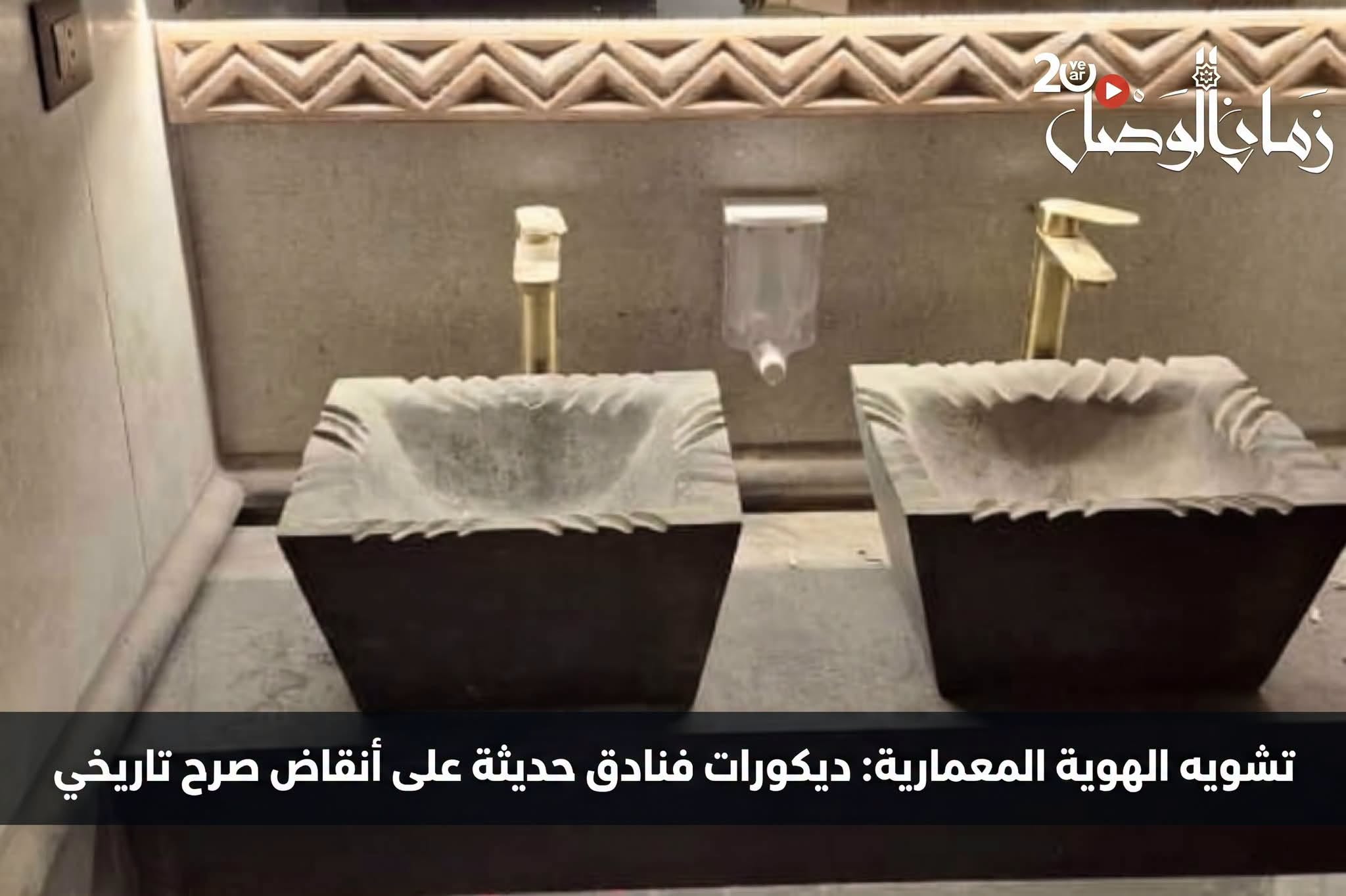
The remaining images reveal the historic walls entirely encased in ceramic tiles and granite, alongside the installation of modern kitchen cabinetry and washbasins—complete with gold-colored faucets and concealed lighting. Beyond the visual travesty, covering historic stone with Portland cement and ceramic tiles amounts to a slow death sentence for the walls; it prevents the stone and the original lime-based mortar from "breathing," trapping moisture and salts inside the masonry, which causes it to deteriorate from within.
International charters for the restoration of antiquities—such as the Venice Charter—establish a "golden rule": the principle of reversibility. This mandates that any modern additions or installations must be external and temporary, capable of being removed without damaging even a single stone. What is occurring at the Al-Zahrawi Palace—including the breaking of basalt, the burying of water tanks, and the embedding of drainage pipes into the walls—is neither restoration nor rehabilitation. Rather, it is an irreversible act of destruction that sacrifices a rare historic landmark on the altar of cheap, commercial decor. This places both the supervising and executing parties under a profound historical and legal responsibility that demands immediate accountability.
Zaman Al Wasl


Comments About This Article
Please fill the fields below.